
Your music business.On autopilot.
Artist context, release planning, storefronts, fan capture, and roster intelligence — the music software I built around Aria and MCP.
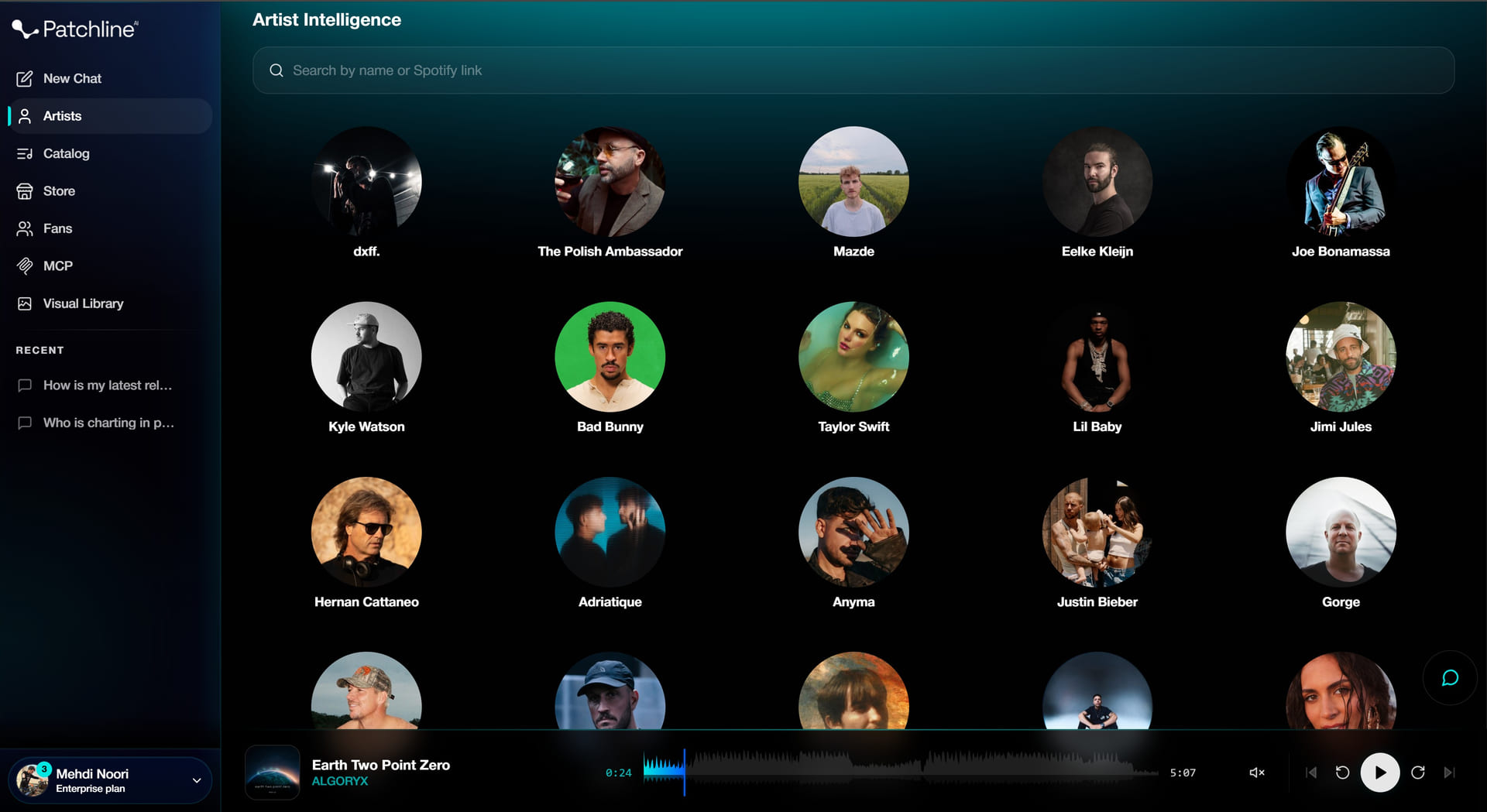
One music context. Connected assistants.
Artist information, project context, and scoped tools shared between a product interface and AI assistants.
// Integration engineering
From a question to an approved action.
The integration work explored release preparation, preflight checks, payload review, and explicit approval. A distributor connection belongs to the client’s own account and is scoped separately.
Review first
Your approval
Check the context, permissions, and proposed action before anything consequential runs.
Client-owned tools
Your accounts
Connected tools and platform accounts stay with the person or team using them.
Structured artist and project information gives the assistant something concrete to work with.
The interface separates proposed work from the actions a user chooses to approve.
A custom automation names its tools, output, review steps, and acceptance checks.
// Aria works in your AI tools
// One brain for your music stack
Patchline connects the places where artist, label, and management work already happens.
- Spotify
- Apple Music
- YouTube
- Google Drive
- Notion
- ClickUp
- Stripe
// Release content kit
Every drop comes with a release kit.
Upload one track and Patchline generates the promo videos, platform captions, and a launch calendar, all attached to your drop page and storefront. It is the content that sells the release.
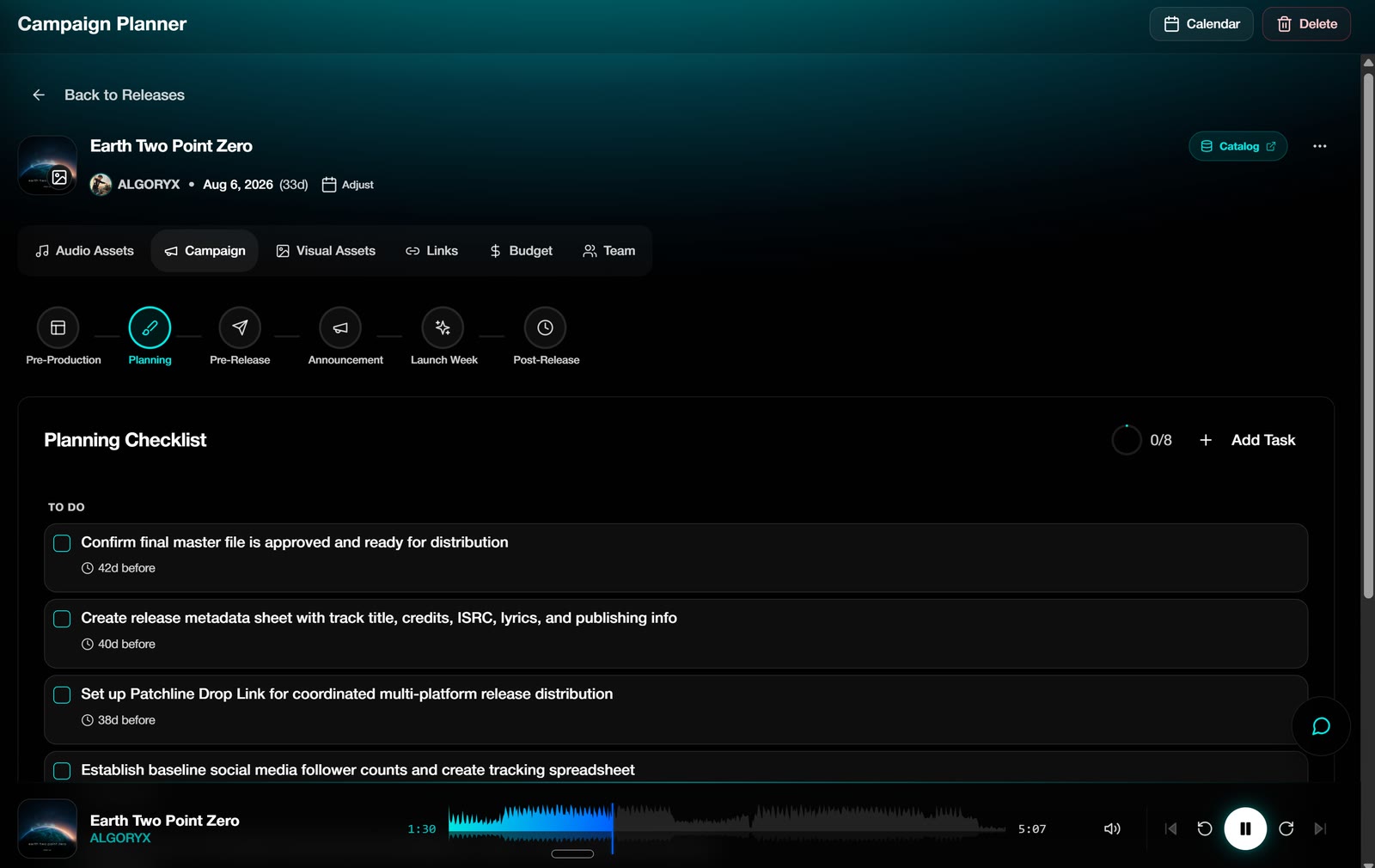
Plan the release
Timeline, checklist, and assets in one campaign workspace built from the track.
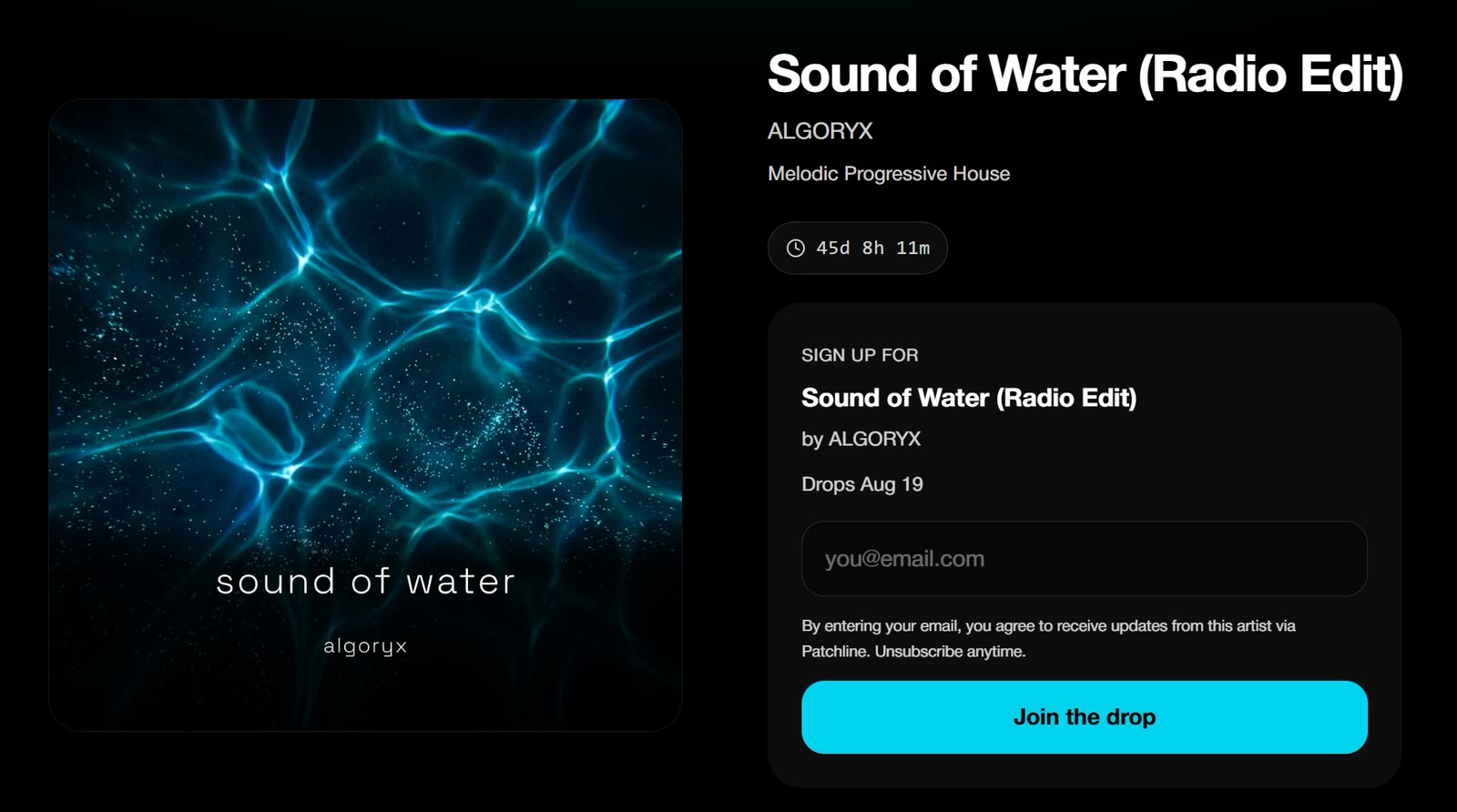
Launch the drop
A shareable drop page with a countdown and fan email capture, ready before release day.
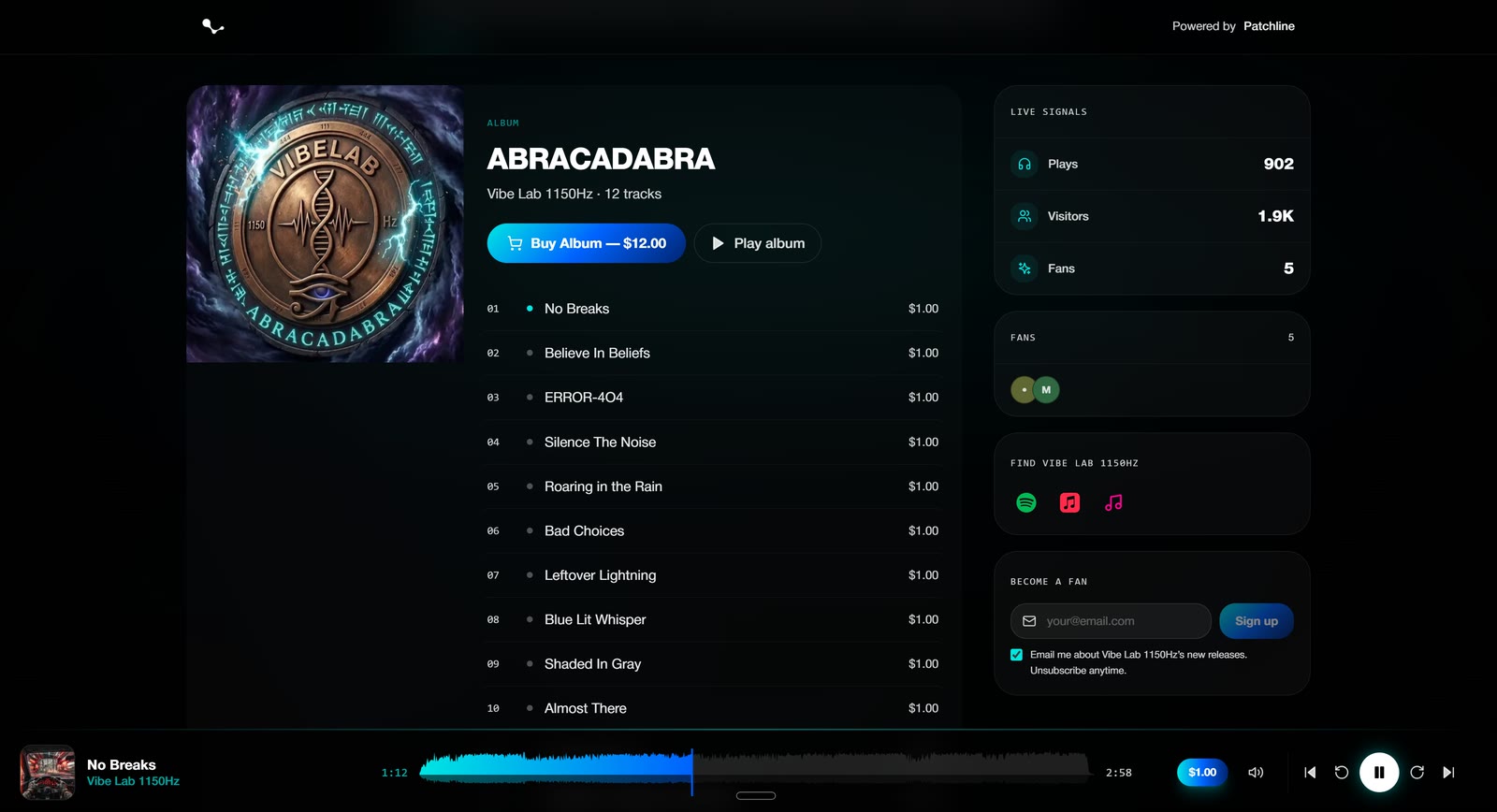
Sell direct
A Stripe-powered checkout interface on an artist’s own storefront.
Structured artist and project information
Scoped tools, permissions, and review
A product workspace and assistant connections
// The drop lives here
Every release gets a storefront that sells.
Competitors can generate media. Patchline attaches it to the place the release actually lives: a link you own, with players, live signals, direct checkout, and fan capture built in.
A Stripe-powered checkout interface on an artist’s own storefront.
Plays, visitors, and fans update in real time as the drop travels.
Every buyer and signup becomes a contact your roster keeps.
// Marketplace
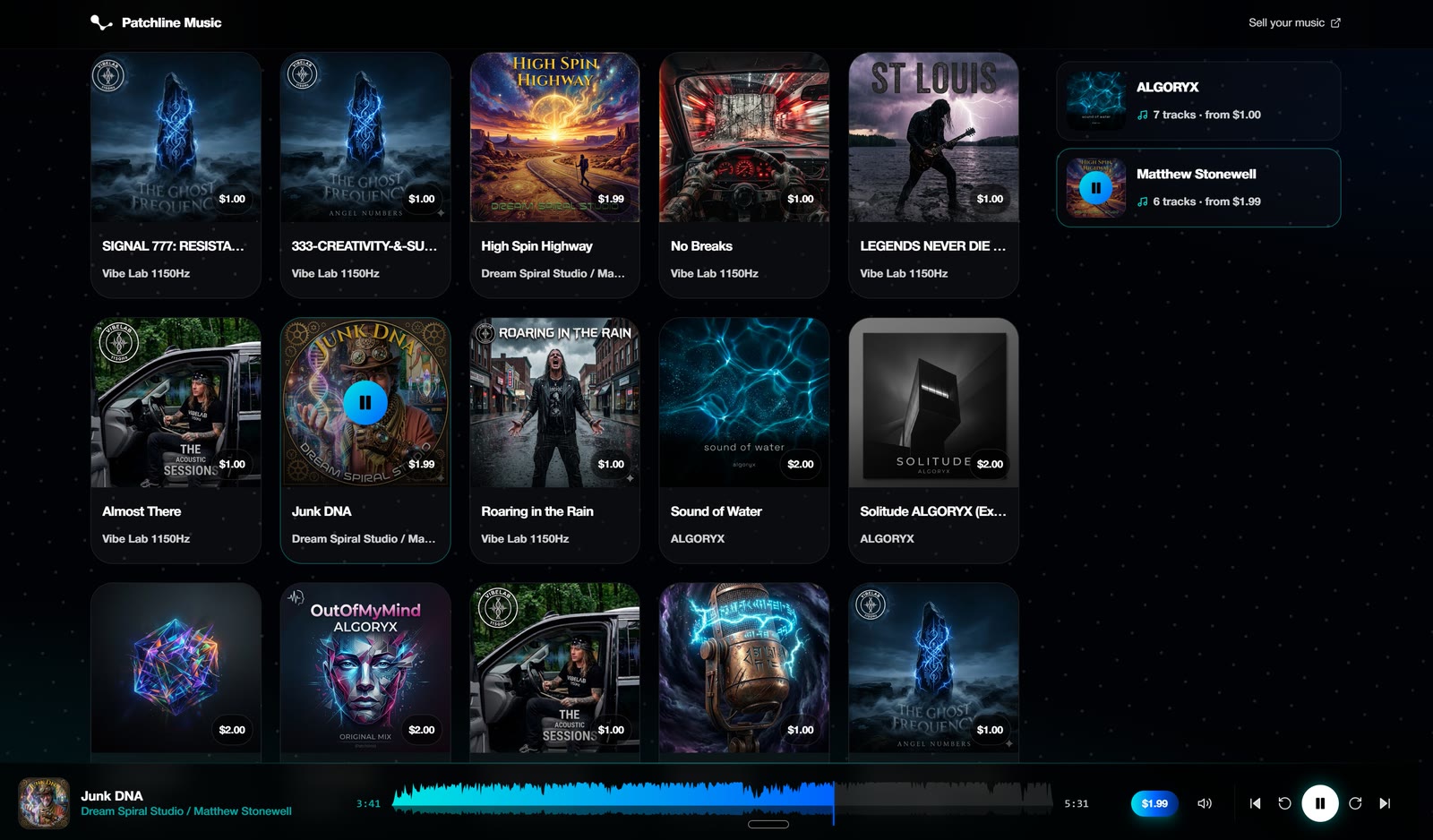
Every drop lands in one marketplace.
Your storefront is yours to own, and it also joins Patchline Music, where fans discover, play, and buy across the whole roster.
// Roster intelligence
Turn roster and catalog signals into AI-ready context.
Patchline brings artist intelligence, catalog, audience, store, and campaign context into one hub your team can actually use.
Every artist in one operating layer
Artist profiles, catalogs, release plans, store links, and audience context in one workspace your team runs from.
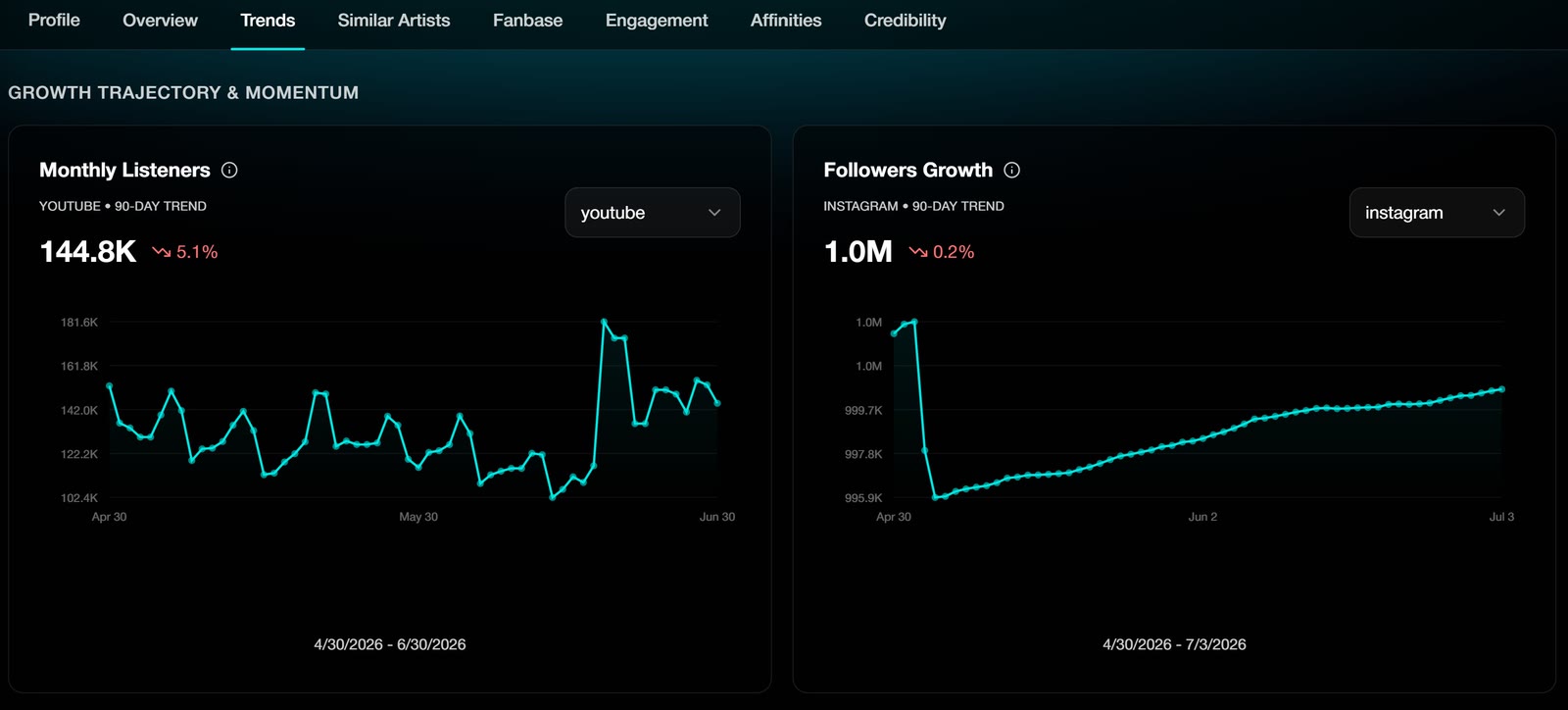
Streaming, social, and catalog context
Read momentum across streaming, social, store, and fan sources without turning research into spreadsheet work.
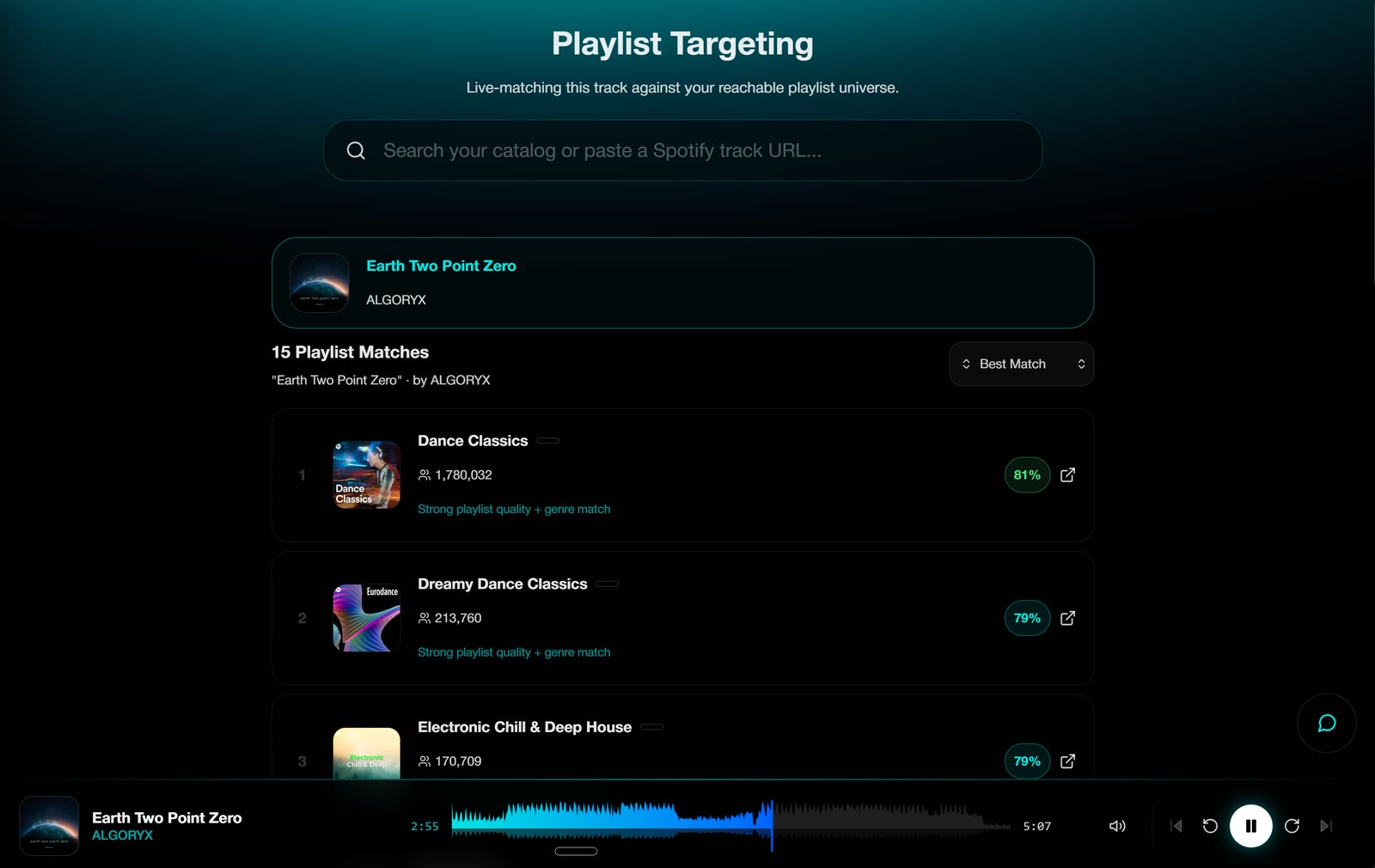
Turn intelligence into release work
Ask Aria to build plans, prep links, summarize opportunities, and route the next move to the right surface.
// Fan capture
Turn every drop into audience you own.
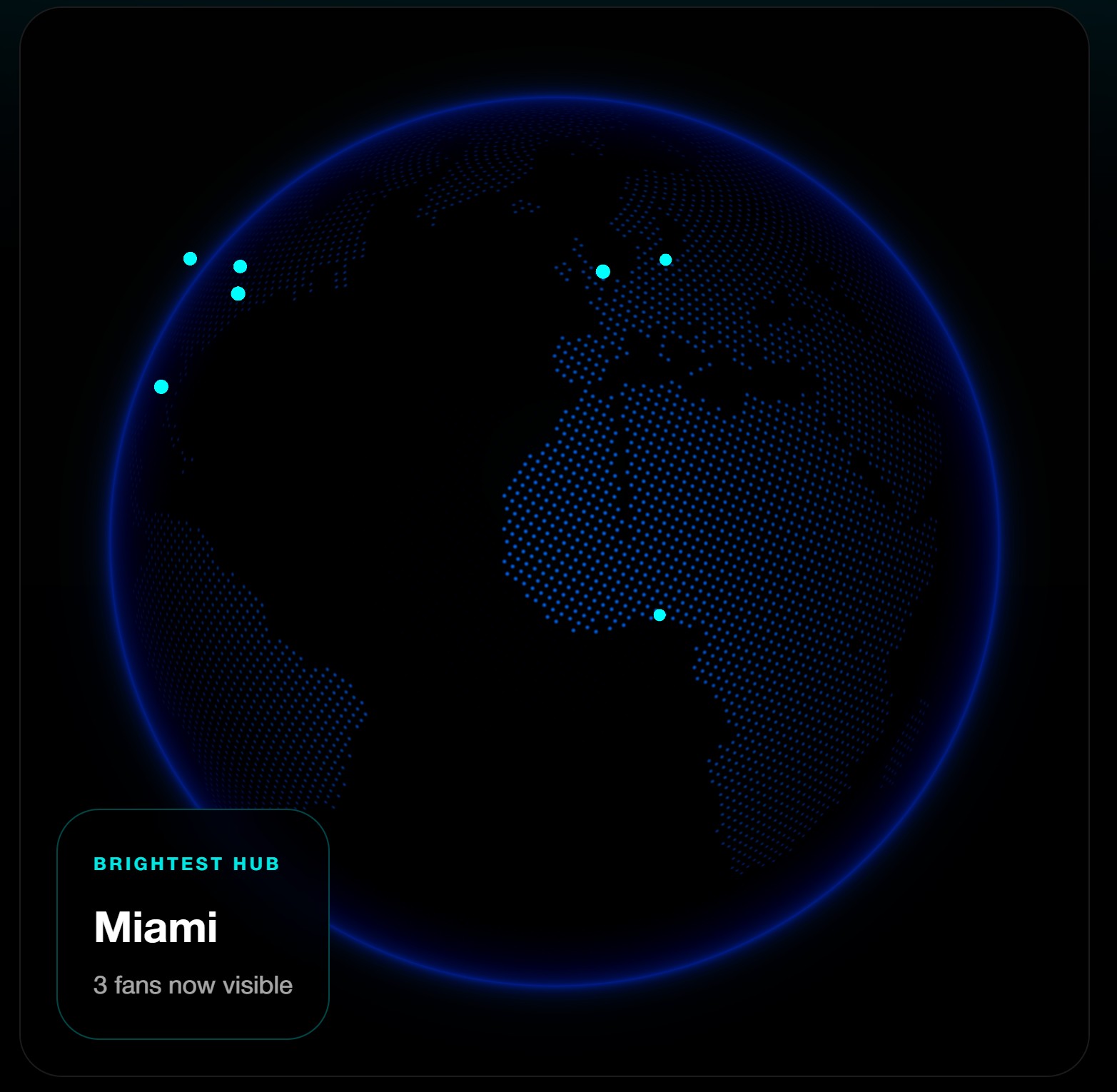
Every sale, signup, and reminder becomes fan signal on your map, not a metric locked inside someone else's platform. That audience is the context Aria uses for the next release.
Drop pages and storefronts capture fan emails straight into your roster, not a platform silo.
Watch where an audience lights up so the next drop and campaign target the right rooms.
// Inbound connectivity
Every page you publish is built to be read by AI.
Discovery is moving from search boxes to AI answers. Your store, artist, release, and smart-link pages ship with machine-readable context, so when an AI looks up your music, it gets the real story.
Store, artist, release, and smart-link pages ship machine-readable context.
Agent-discovery files and MCP expose the same operating layer as the docs.
Answers stay grounded in catalog, release, store, and fan context.
// Ways to put Aria to work
Use the same music brain everywhere.
Start in Patchline, or connect the MCP layer to the AI tools your team already uses. Same agent, same data, same operating loop.
Run the team workspace
The full Patchline command center for catalog, releases, store, fans, and business workflows.
Use Aria inside Claude, ChatGPT, and Gemini
Install the connector once and ask from the AI tools you already use, grounded in the same Patchline data.
Explore Aria & MCP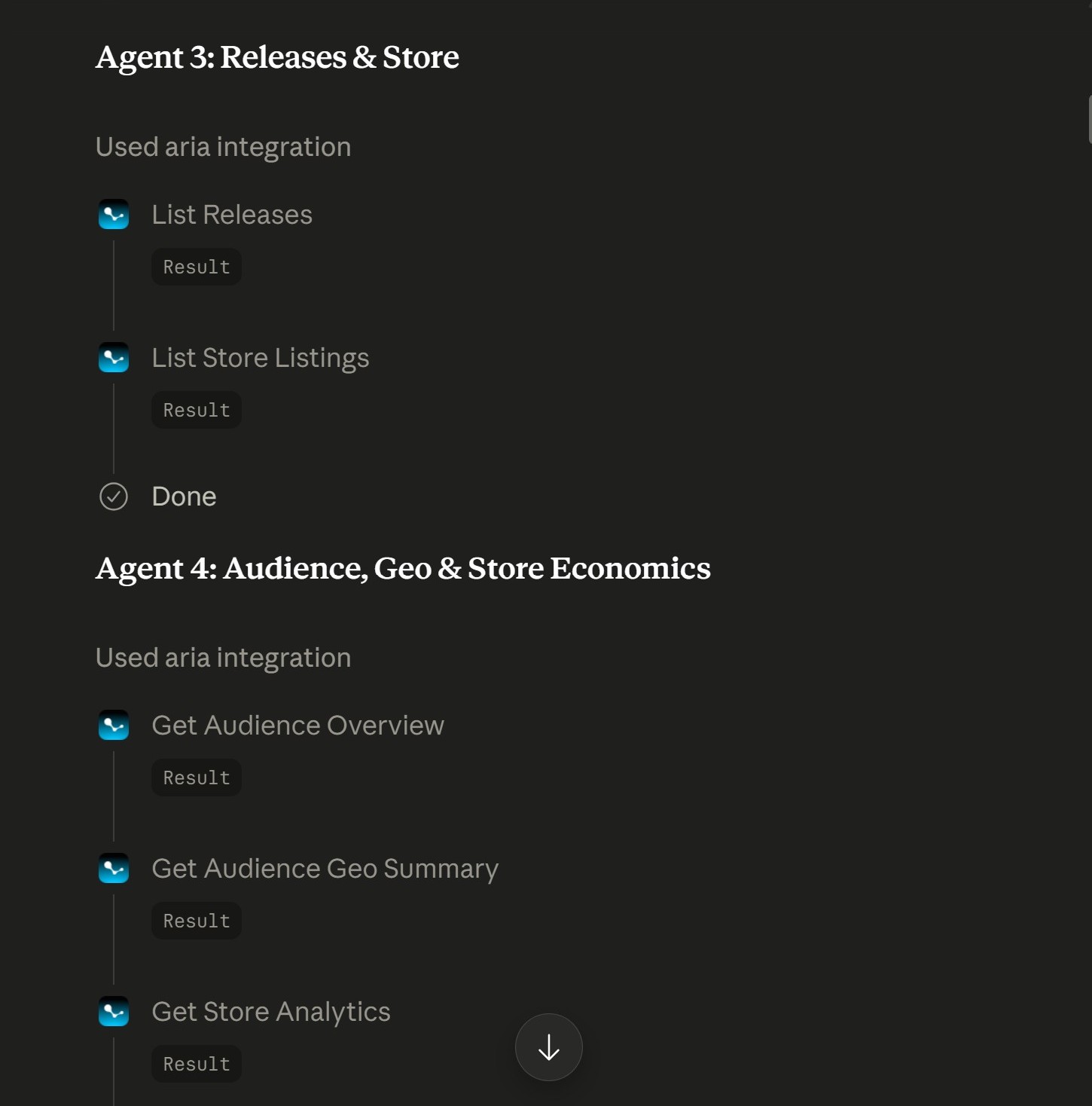
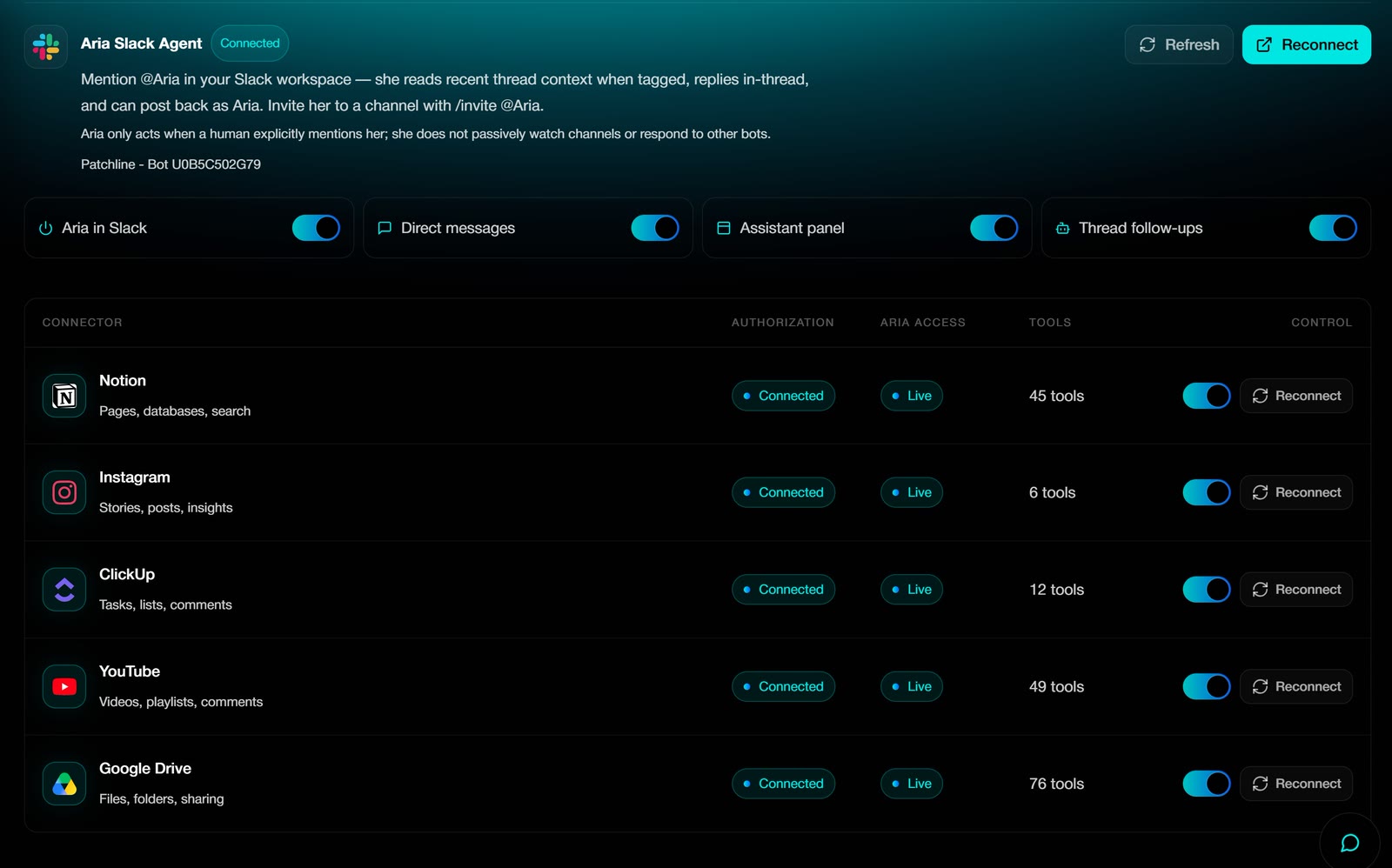
Then ask Aria: "what should this roster do next?"
// Field proof
Built with real music operators.
When you're making music to move people, you can't afford to slow down. Patchline isn't just infrastructure; it's the engine. The hands-on support makes it clear this is built by a creator who understands the work.
Integrating the Patchline MCP server into Claude has streamlined everything: no more copy-pasting ISRC codes or screenshots. My catalog, audience data, and infrastructure are directly accessible to the AI, so I can focus on the sound while building a direct-to-fan business I own.
// FAQ
Questions, answered.
What is Patchline?
This is the music software I built: an AI-native workspace for catalog, release planning, direct-to-fan sales, fan capture, and roster intelligence. Aria and its MCP layer connected that music context to AI assistants.
Which AI apps does Aria work in?
The MCP integration layer was designed for compatible assistants, including Claude and ChatGPT. Current assistant setup work is scoped around the tools your team chooses and the connections they support.
What grounds Aria's answers?
The product organized roster profiles, catalog metadata, release plans, storefront activity, and fan signals as context for Aria. Connected tools, available data, and explicit permissions define what an assistant can do.
Does this replace our distributor or DSPs?
This page shows product and integration engineering. A custom connection to a distributor is scoped around the client’s own account, permissions, review process, and available tools; it is not a distribution subscription.
Can Patchline handle a full roster with multiple artists?
The product was designed around multiple artists, roster profiles, and catalog context. For current work, we agree the assistant setup, training, or automation scope with your team before the build starts.
How does the release kit get generated?
The release-kit workflow connected track metadata to promo media, a shareable drop page, captions, a launch calendar, and a store listing. The original planner, drop-page, and storefront interfaces are shown above.
Bring that experience to your workflow.
AI assistant setup, hands-on learning, and custom automation for music businesses.